The Problem You Think You Have
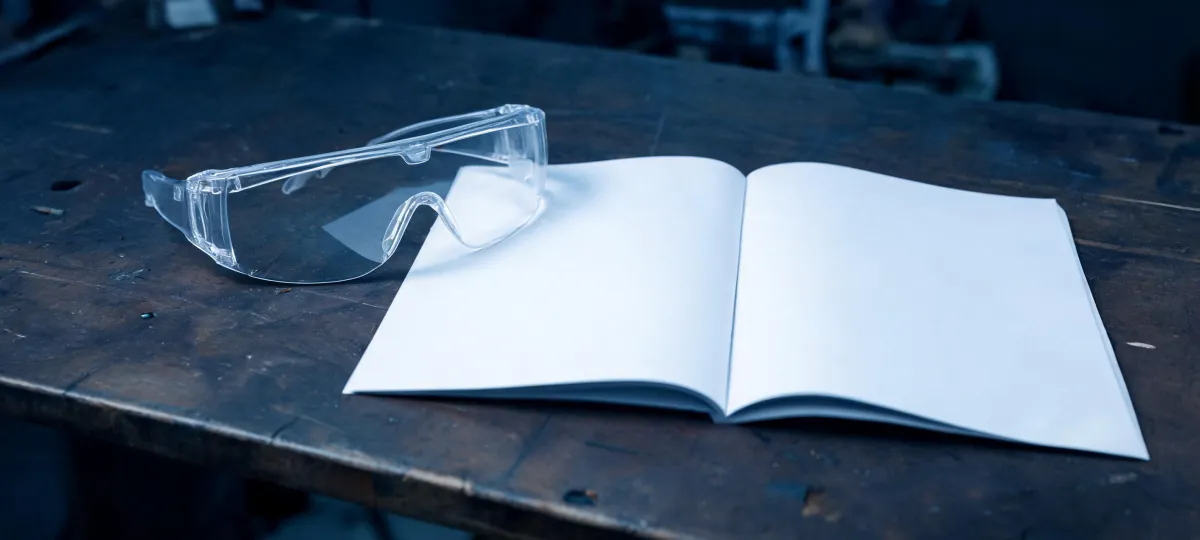
In July 2022, a warehouse supervisor sent me a photo. Eleven pairs of "anti-fog" safety glasses lined up on a workbench, every single lens fogged up like a bathroom mirror. He'd received them three weeks earlier from a spec sheet that said, in bold: Anti-Fog Coating — Lasts All Day.
He wasn't angry. That was the worst part. He just wrote: "Do we send these back, or do we stop wearing them?"
My first instinct was the easy one — bad vendor, return the shipment, find someone else. Six months and one failed reorder later, I realized the vendor wasn't really the problem. My sourcing process was. I've been handling safety eyewear orders for 8 years now, and I've personally made (and written down) three costly anti-fog mistakes totaling roughly $4,100 in wasted budget. This is what I wish someone had told me in my first year.
What's Actually Going On
Here's the thing nobody puts on a quote sheet. "Anti-fog" is not a product feature. It's a test result — measured under specific conditions, on a specific day, by a specific lab. Everything after that is marketing.
1. The label describes a lab, not your warehouse
There are real standards here, and they matter. EN 166 uses an "N" marking for anti-fog and a "K" marking for anti-scratch. ANSI/ISEA Z87.1 has its own set of lens performance markings. But here's the part that trips people up: those marks are stamped on the lens or frame — not printed on a sales page.
And even a passing mark means the lens passed a defined test, in a defined environment. It does not mean your guy on the loading dock at 2 PM in August will see clearly for ten hours. A lens that passes at 22°C in a climate-controlled test room is not the same lens that passes at 38°C with a face mask on.
What most people don't realize is that most "anti-fog" testing happens under mild, stable conditions. Your real-world conditions are rarely mild or stable.
2. There are three anti-fog approaches, and you probably picked the wrong one
Factory-applied permanent coating. Washable, invisible, expensive. Great for low-friction environments where workers rarely touch the lens.
Spray or gel. Cheaper, re-applicable on the spot, but needs a small bit of discipline from the worker.
Wipes. Cheapest, most disposable, least effective over a full shift.
Here's the counterintuitive part that cost me real money: in dusty, hot, or heavily wiped environments, a good anti-fog spray often outperforms a factory coating — because the worker can reapply it. Permanent coatings degrade with each cleaning. Alcohol wipes can kill one in weeks. Nobody tells you this, because a factory-coated lens sells for two to three times the price of a plain lens plus a $9 bottle of spray.
3. Fogging has three causes, and the lens is only one
- Temperature differential — cold lens, warm face.
- Humidity — breath, sweat, mask exhaust.
- Fit — a poorly seated nose bridge or a mask venting upward will fog any lens on the market.
I once spent $740 replacing "defective" glasses before someone suggested adjusting the nose pads. That's the whole story. The lenses were fine. The fit was wrong.
What It Actually Costs You
The obvious cost is the reorder. The real cost is everything after it.
In 2019, I placed an order for 900 pairs at $3.40 each — about $3,060 of eyewear. The sample pair looked great. Two weeks into use, the coating on the nose bridge started flaking. That one came back as $1,100 in returns, another $2,000 in replacements, and a three-week delay that pushed a client compliance review back a full month.
That's the version of the story where you count the dollars. There's a worse version where you don't.
When glasses fog up, workers stop wearing them. That's not a comfort issue — that's a compliance issue, and depending on your industry, a liability issue. A fogged-up lens is a lens that sits in a locker, and a pair of glasses in a locker protects nobody. (Note to self: I still need to write up the incident that taught me this.)
Then there's the sourcing cost nobody budgets for — the time. Every failed order eats three to five weeks: the sample, the rejection, the reorder, the second sample, the second rejection. Multiply that by three bad cycles and you've spent a full quarter chasing a $3,060 line item.
The sample order problem
Here's something vendors won't tell you: many suppliers treat small sample orders as a nuisance. When I called about 12 pairs, I could hear the sales rep's tone change. Two of them quoted a price and never followed up. One of them — I still remember — replied with a minimum order quantity of 500 and a two-line email.
That's a red flag, and not just for the sample. A supplier who won't take a 12-pair test order seriously is very unlikely to take a $20,000 order seriously when there's a problem on a Friday afternoon. When I was starting out, the vendors who treated my $200 orders properly are the ones I still use for $20,000 orders today. Small doesn't mean unimportant — it means potential. I've walked away from two otherwise-fine suppliers over this and I'd do it again.
(Should mention: the small-batch test also catches fit issues, which is a separate problem entirely from coating quality.)
The $80 mistake I keep watching people make
I skipped a sample order once to save about $80 in shipping and time. Ended up spending over $3,200 on returns and rush replacements. That's the version of "cheaper" that never stays cheaper.
Every spreadsheet I've built says the budget option wins. Every experience I've had says the vendor who answers emails at 4:45 PM on a Friday is the one who saves you $3,000 in the long run. I still make this mistake sometimes. At least, I did until the September 2022 order.
What I Do Now
The problem isn't "finding anti-fog glasses." It's matching a coating, a cleaning routine, and a fit to a specific environment. Once you frame it that way, the six questions below pretty much answer themselves.
- Which standard, and can you send the test report? "ANSI Z87.1" alone isn't enough. Ask which marking, tested under what conditions, and get the report in writing.
- Coating or spray? Both are valid. Pick based on how often workers clean their lenses, not on which one sounds fancier on the quote.
- What breaks the coating? Ask about alcohol wipes, ammonia cleaners, and how many cleanings the coating is rated for.
- Sample first, in your own environment. Twelve pairs, one week, on the actual crew. Not a curated sample pair in an office.
- Do they take a small order seriously? The reply to your first email tells you everything.
- What's the real total? Glasses, spray, replacements for lost pairs, and the cost of one failed reorder. The lowest unit price is almost never the lowest total.
That's it. No clever sourcing trick, no secret vendor. Just less guessing.
Bottom line: the label tells you a lens passed a test. It doesn't tell you it'll work on your floor. Those are two different questions, and only one of them gets answered by a product page.